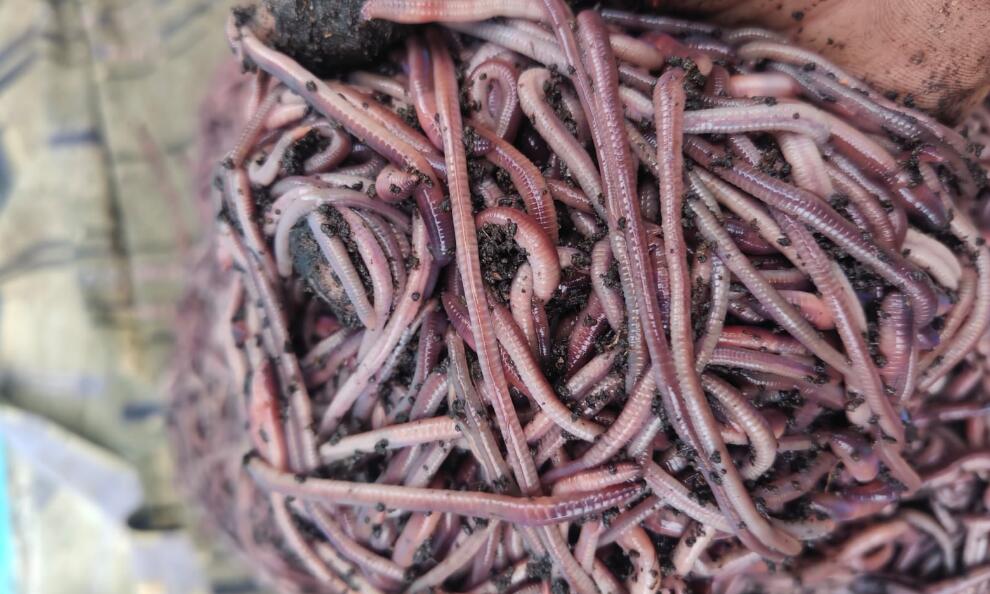
Exportearthworms.com – Red wigglers (often sold under names like Eisenia fetida or Eisenia andrei) are the small, velvety, reddish-brown worms that have become indispensable to gardeners, urban composters, and sustainable-living enthusiasts. Unlike earthworms that burrow deep into soil, red wigglers thrive near the surface in rich, decomposing organic matter which makes them perfectly suited for worm bins, vermicomposting systems, and countertop composters.
If you are curious about how to convert kitchen scraps into dark, crumbly, nutrient-dense castings, or you want to reduce landfill waste while improving soil health, red wigglers are the biological workhorses you need to understand. This article covers everything from basic biology and why they’re so effective, to setting up a worm bin, feeding and care, harvesting castings, troubleshooting common problems, and practical uses of vermicompost in the garden. Read on to learn how to harness these tiny composting champions for healthier plants, less waste, and a more resilient garden.
What exactly are red wigglers and how do they differ from other worms?
Red wigglers are a species adapted to living in decaying organic material rather than in mineral soil, which is why they are sometimes called manure worms or compost worms. Their bodies are shorter and thicker than many common earthworms, and they reproduce rapidly under favorable conditions; a single pair can produce dozens or hundreds of offspring in a matter of months when food, moisture, and temperature are right.
Biologically they are efficient at breaking down organic matter because they consume a wide range of soft plant material, microbes, and fungi, then excrete it as worm castings a highly stabilized form of organic matter rich in nutrients, beneficial microbes, and compounds that improve soil structure and plant growth. That efficiency and surface-dwelling behavior make them ideal for contained composting systems where food scraps and bedding remain near the surface rather than being tilled deep into soil.
Why use red wigglers for composting the benefits for gardeners and households
Using red wigglers is a practical, low-tech way to accelerate decomposition and produce an amendment far superior to raw compost in many ways. Worm castings contain concentrated nutrients such as nitrogen, phosphorus, and potassium in forms that are more plant-available, along with micronutrients, fulvic and humic substances, and a diverse community of beneficial microbes.
These castings improve soil water retention, aeration, and aggregation, reduce plant stress, and can even increase resistance to certain diseases by promoting a healthier root microbiome. For households, vermicomposting reduces kitchen waste, lowers methane emissions from landfills, and provides a continuous supply of a potent soil amendment. From an economic perspective, it cuts down on store-bought fertilizers and soil conditioners, and from an ecological perspective, it closes nutrient loops by returning carbon and nutrients to the garden rather than exporting them as trash.
Setting up the ideal worm bin size, bedding, and location
A successful worm bin begins with the right container and a comfortable environment for the worms. You can use purpose-built plastic or wooden bins, or repurpose a sturdy plastic tote; the key is to provide a bin with a few small ventilation holes, good drainage, and enough surface area red wigglers prefer space rather than depth. Bedding should be fluffy, absorbent, and partially decomposed: shredded newspaper, cardboard, coconut coir, and well-aged compost or leaf mold are common choices.
The bedding should be moistened to the consistency of a wrung-out sponge and layered loosely to allow air and water movement. Place the bin in a sheltered location out of direct sunlight and extreme temperatures a cool basement, garage, shaded porch, or indoor cupboard works well. Optimal temperatures for red wigglers are generally between about 15°C to 25°C (59°F to 77°F); they tolerate slightly warmer or cooler conditions but will reproduce and feed most rapidly within that comfortable range.
Feeding and routine care what to feed, how much, and what to avoid
Red wigglers are not picky, but there are guidelines that keep them healthy and your bin odor-free. Feed kitchen scraps such as fruit and vegetable peels, coffee grounds, tea bags (without staples), crushed eggshells, and small amounts of grains or cooked rice saved from grease. Avoid salty, oily, or highly acidic foods like citrus in large quantities, spicy residues, meat, dairy, and bones, as these can attract pests and slow worm activity.
A good rule of thumb is to add food at a rate the worms can consume in a few days to two weeks start small and increase as the worm population grows. Cover fresh food with a layer of bedding to reduce fruit fly attraction and keep moisture balanced; the bin should be damp but not waterlogged. Periodically fluff the bedding, remove excess moisture via drainage or absorbent bedding additions, and monitor for bad smells (which indicate too much food or anaerobic conditions). Routine care is low-effort: feed, check moisture and temperature, and harvest castings a few times a year.
Reproduction and population management keeping the balance
Under favorable conditions, red wigglers reproduce prolifically: adults are hermaphroditic and lay small, lemon-shaped cocoons that contain 1–5 baby worms each. Population growth is useful up to the capacity of your bin; if the worm population outpaces the bin’s food supply or space, growth will slow or worms will migrate.
To manage population you can expand the bin, start a second bin, harvest and redistribute mature castings (which reduces available hiding places), or sell/give away excess worms to fellow gardeners. Another simple method is to continually add fresh bedding and food to one side of the bin and periodically harvest finished compost from the other, encouraging worms to migrate to newer material while you collect castings.
Harvesting worm castings methods and timing
Harvesting castings (vermicompost) is one of the most satisfying parts of worm composting. There are several practical methods: the migration method, where you move fresh food to one side and encourage worms to relocate before removing finished compost; the light method, where you expose compost in shallow layers under bright light and gently remove worm-free compost; or manual separation when the bin is fairly full and you can pick out worms by hand.
Finished castings are dark, crumbly, and smell earthy they are ready when the original bedding and food residues are largely decomposed and the material is homogeneous. Use harvested castings as a top dressing, potting mix amendment, or to make a liquid worm tea for a quick nutrient boost. Because castings are nutrient-dense, a thin layer spread around plants or mixed into potting mix yields great results without risk of fertilizer burn.
Common problems and troubleshooting pests, odors, and migrations
Even a well-run worm bin can hit occasional snags. Bad odors usually mean anaerobic conditions from too much wet food or compacted bedding; remedy this by adding dry bedding, increasing ventilation, and removing uneaten food. Fruit flies and other pests can be managed by burying food under bedding, keeping the bin covered with breathable material, and avoiding overfeeding.
If worms try to escape or congregate at the surface, check for excessive moisture, extreme temperatures, or high ammonia levels from too much fresh food; adjust moisture, move the bin to a more favorable location, and reduce feeding. Moulds and fungi sometimes appear on fresh food that’s not necessarily harmful and often eaten by worms, but if it becomes heavy, remove the affected material. With small adjustments most issues resolve quickly, as red wigglers are resilient when their basic needs for food, moisture, and aeration are satisfied.
Using vermicompost in the garden application tips and benefits
Vermicompost is remarkably versatile. For potted plants, blend 10–30% castings into potting mixes to improve nutrient availability and water retention. For outdoor beds, topdress with a thin layer (0.5–2 cm) around plants or incorporate a small amount into planting holes to give seedlings a nutrient-rich start. Liquid extracts or “worm tea” brewed from castings provide a gentle foliar and root-zone feed that can be applied every few weeks during the growing season.
The microbial diversity in castings helps with nutrient cycling and can suppress certain soil pathogens indirectly, making it valuable for transplanting, seed starting, and container gardening where soil life is often diminished. Because castings are stable and balanced, they are safer to use than raw manures or uncomposted fertilizers and contribute to longer-term soil health gains.