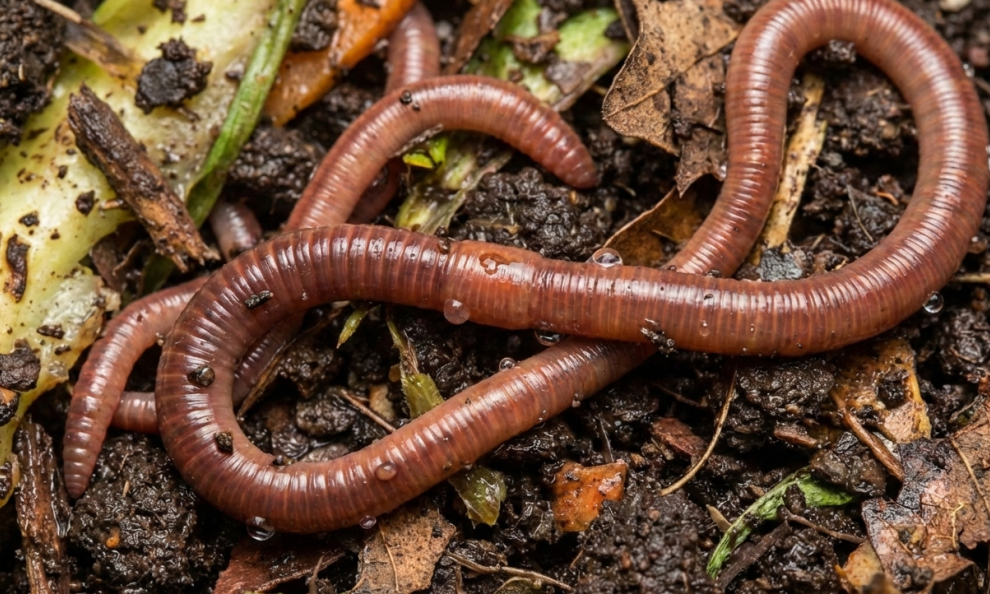
exportearthworms.com – Red wiggler worms (Eisenia fetida) are the unsung heroes of vermicomposting efficient, tough, and quietly churning out nutrient-rich worm castings. But even these hardy little workers can face challenges. Whether you’re just starting out or you’ve been worm farming for a while, spotting common issues early and knowing how to tackle them will help keep your worm bin thriving. Below, you’ll find the top ten problems that people often run into with red wigglers, along with straightforward explanations of what’s causing them and practical, step-by-step solutions you can put into action right away.
1. Worms Escaping the Bin
Worms making a break for it from the bin can be a real headache for those just starting out with vermicomposting. These little escapes often happen when the bin’s environment gets a bit too stressful whether it’s too wet, too dry, too acidic, too hot, or lacking in oxygen. Sometimes, it’s just a matter of them being curious and exploring, especially if they’re drawn to food placed near the edges.
So, how do you tackle this issue?
- First, check the moisture level: you want it to feel like a damp sponge, around 60–80% moisture. If it’s too soggy, toss in some dry bedding like shredded cardboard or coconut coir; if it’s too dry, give it a light misting.
- Next, keep an eye on the temperature: aim for a cool spot between 15–25°C (59–77°F). If it’s getting too hot, consider moving it indoors or to a shadier location.
- Also, think about the bedding: adding fresh, fluffy materials like shredded newspaper, coconut coir, or cardboard can create cozy hiding spots for your worms.
- When it comes to food, bury those scraps in the middle of the bin instead of leaving them on the surface or near the edges.
- Lastly, monitor the pH and ammonia levels: steer clear of feeding too much citrus or meat, and if you need to balance out acidity, sprinkle in some crushed eggshells.
2. Foul Odor (Rotting Smell)
A healthy vermicompost bin should have a nice earthy aroma. If you catch a whiff of something strong and rotten or an ammonia-like scent, that’s a red flag for anaerobic conditions—basically, a lack of oxygen. This usually happens due to overfeeding, too much moisture, or not enough bedding and aeration.
How to fix it
- Start by removing any food that’s clearly rotting or moldy.
- Next, turn or gently fluff the bedding to let some oxygen back in.
- You can also add dry, carbon-rich materials like shredded paper, dry leaves, or cardboard to soak up excess moisture and help balance the carbon-to-nitrogen ratio.
- Give the system a break by stopping feeding for a week to allow it to recover.
- If your bin is waterlogged, take out the wet material, spread it out to dry, and replace it with fresh bedding.
3. Too Many Fruit Flies or Other Pests
Dealing with too many fruit flies or other pesky critters can be a real headache. These little nuisances often show up when fruits and veggies are left out in the open or are just too ripe in the compost bin. While most of these surface pests are more annoying than harmful, a heavy infestation can stress out your worms and turn the composting process into a bit of a mess.
So, how can you tackle this issue?
- Start by burying your food scraps at least 5–10 cm deep beneath the bedding.
- Another tip is to freeze or chop up fruit peels before tossing them in; freezing helps to eliminate any fly eggs.
- Make sure to use a tight-fitting lid and keep a dry layer of bedding on top to keep those flies at bay.
- You can also add a thin layer of finished compost or dry leaves on top to create a barrier.
- If the problem persists, try trapping the adult flies with a small jar of apple cider vinegar covered with plastic wrap (just poke a few holes in it); this will help reduce the number of breeding adults.
4. Slow or Stalled Worm Activity
If you notice that your worms are moving slowly or your compost bin isn’t producing as much castings as you’d hoped, it could be due to environmental stress, an unbalanced diet, or overcrowding. Sometimes, it’s just a sign that a new bin is still finding its balance.
Here’s how to get things back on track:
- First, check the temperature and moisture levels to make sure they’re within the ideal ranges.
- Next, feed them a balanced diet. Steer clear of too much citrus, onion, garlic, and oily foods. Instead, offer a variety of kitchen scraps along with some occasional cardboard.
- Avoid giving them a huge amount of food all at once; it’s better to add small portions regularly.
- If your worms are overcrowded, consider splitting the colony into a second bin or cutting back on feeding for a little while.
- Lastly, make sure there’s enough aeration by fluffing up the bedding and adding some coarse materials like shredded cardboard.
5. Worms Dying or Low Survival Rate
Worms can face high mortality rates due to extreme temperatures, long periods of flooding, exposure to toxic substances, or the stress of being introduced to a new environment without proper acclimation. When you experience sudden die-offs, it can be quite alarming and requires immediate attention.
How to fix it
- Start by checking the bin for any signs of excessive heat (over 30°C/86°F) or freezing conditions; if you find any, consider relocating the worms.
- Make sure to eliminate any toxic substances like cleaners, soaps, or pesticides that might have accidentally been introduced.
- Look out for pests such as ants or rodents that could be preying on your worms.
- Enhance drainage and get rid of any excess water; adding dry bedding can help soak up moisture.
- If your worms are from a different environment, allow them some time to adjust, and try to avoid making any drastic changes to their food or bedding all at once.
6. Mold and Fungal Growth
You might notice white mold or fuzzy fungal threads popping up in damp, organic spaces, and while they can seem alarming, they’re often harmless. In fact, some fungi play a crucial role in breaking down tough materials. But if you see a lot of mold or a thick, fuzzy growth, it could be a sign that something’s off like too much moisture or not enough oxygen.
How to fix it
- Start by getting rid of any heavily molded food pieces.
- Boost airflow by fluffing up the bedding and mixing in some coarse materials like shredded cardboard or coconut coir.
- Cut down on moisture by adding some dry bedding.
- Be careful not to overfeed with sugary foods that can promote mold growth (think honeyed treats).
- If the mold keeps coming back, try reducing feedings for a while and increasing aeration until things balance out.
7. Excessive Heat in the Bin
When bins are left out in the blazing sun or tucked away in sweltering garages, they can heat up pretty quickly, which can stress out or even kill your worms. Plus, if you have a big, compacted pile, the rapid microbial activity can generate heat from the inside.
How to fix it
- Relocate the bin to a cool, shaded spot with good ventilation, and consider insulating the sides if the outdoor temperatures fluctuate a lot.
- You can also open up vents or create small holes to boost airflow while keeping pests at bay.
- Make sure to break up any compacted bedding and get rid of those large, hot clumps of decomposing material.
- Think about using several smaller bins instead of one big one to help prevent that internal heat from building up.
8. Food Not Breaking Down (Slow Composting)
If your food scraps are hanging around for too long without breaking down, it could be that your compost bin is too cold, too dry, or just not teaming with enough microbial life or surface area.
Here’s how to get things moving:
- Start by chopping or shredding larger scraps before tossing them in; this helps increase the surface area for decomposition.
- Keep the environment nice and moist to encourage those helpful microbes give it a little spritz if needed.
- You can also add some finished compost or garden soil to bring in those beneficial microbes.
- Lastly, make sure you have the right bedding and maintain moderate temperatures to keep the decomposition process humming along.
9. High Acidity (pH Imbalance)
If your compost bin is turning out to be too acidic, it might be due to a steady stream of acidic foods like citrus peels or too many coffee grounds, especially if there’s not enough calcium to balance things out. This acidic environment can make worms feel uneasy and slow down the breakdown process of organic matter.
How to fix it
- Take a break from adding those acidic foods for a bit.
- Sprinkle in some crushed eggshells, lime-free garden lime, or finely ground limestone, but be careful not to overdo it—testing the pH is a good idea if you can.
- Incorporate more carbon-rich materials like shredded paper or cardboard to help balance out the acidity.
- You can also toss in a handful of garden soil or finished compost to help stabilize the microbial community.
10. Bin Attracting Predators (Rodents, Cats, Raccoons)
If your bin is giving off strong odors or has easy-to-reach food, it can attract all sorts of curious critters. While these predators aren’t specifically after the worms, they’ll definitely dig through the bin in search of tasty leftovers.
So, how can you tackle this issue?
- First off, opt for sturdy, rodent-proof containers that have tight-fitting lids.
- Elevate the bin by placing it on a stand or pallet to make it trickier for small animals to access.
- Make sure to bury your food scraps and steer clear of adding meat, dairy, or greasy foods that can lure in wildlife.
- If you find that the local wildlife just won’t give up, consider relocating the bin to a more sheltered area, like a garage, shed, or balcony, where those pesky animals can’t get to it.